Enterprise AI Governance Lives Inside the Enterprise, Not the Model
Every frontier model an enterprise might choose comes with some degree of opacity. These systems are built that way and the labs are pretty open about their own limits. Researchers across labs have flagged reduced chain-of-thought monitorability and undetected reward-hacking as recurring risks. Read today's paper, and the examples of associated risk are exhaustive.
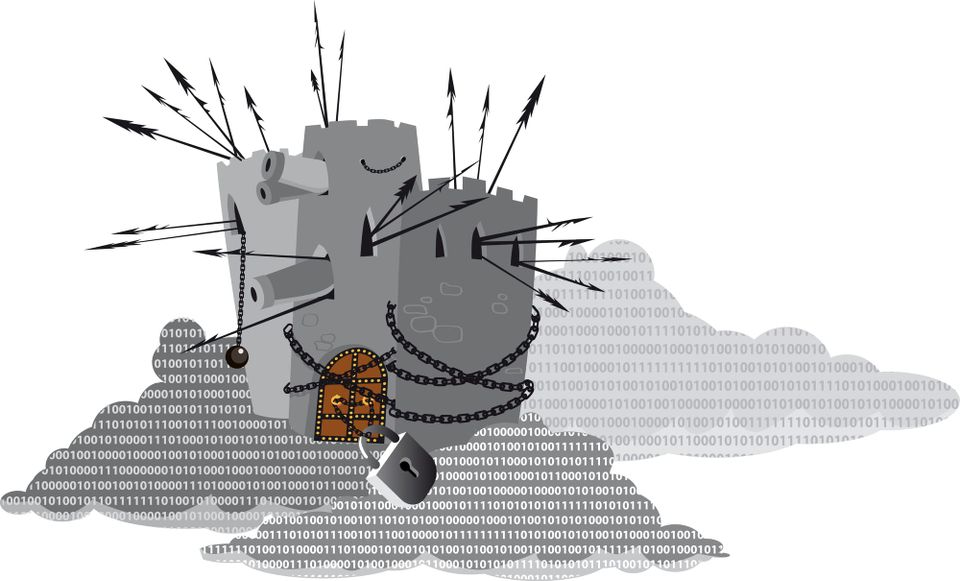
The point is that no matter which model an enterprise selects, that model will remain a sealed component the enterprise cannot fully inspect or control. Governance was never going to happen inside the model. It has to happen at the boundary the enterprise builds around it; and control what surrounds the model, not what's inside it.
One example, Anthropic's Enterprise Frontier Safeguards let regulated customers keep data in their own cloud buckets under customer-managed encryption while the model runs remotely. The enterprise governs data residency and access, not the model's reasoning.
Another example, CrowdStrike's SafeMind runs closed-loop adversarial testing against digital twins of the customer's own infrastructure, continuously probing what any connected model can do to enterprise systems, regardless of which model sits behind the connection.
Neither approach cares which frontier model is in play. Both are durable governance patterns that hold regardless of the model behind them.
Enterprise architecture applies a discipline EA already owns: govern identity, access, and inventory layers regardless of which third-party component sits behind it.
One example, Okta's Agent SSO issues short-lived, scoped tokens so an agent authenticates as an identity the enterprise controls.
Another example, Google's Agent Gateway brokers every agent-to-data interaction so the enterprise decides what any agent can reach, independent of the model powering it.
Alas, agent-to-agent fabrics raise the stakes because the risk compounds across the enterprise's own solution architectures. When agents delegate to other agents, a permissioning gap or a missing trust boundary lets one agent's action cascade unchecked. These are enterprise-architecture failures, not model failures.
The frontier model is a component of a distributed system. The responsibility of enterprise architecture is designing governance that holds up regardless of the external component.
I don't love IDC reports, but worth mentioning a September 2025 IDC report titled "The Trust Imperative." It found that organizations prioritizing AI governance are 60% more likely to double the ROI of their AI projects.
Enterprise Architecture applies AI governance and that ensures trust across the enterprise.
Member discussion